
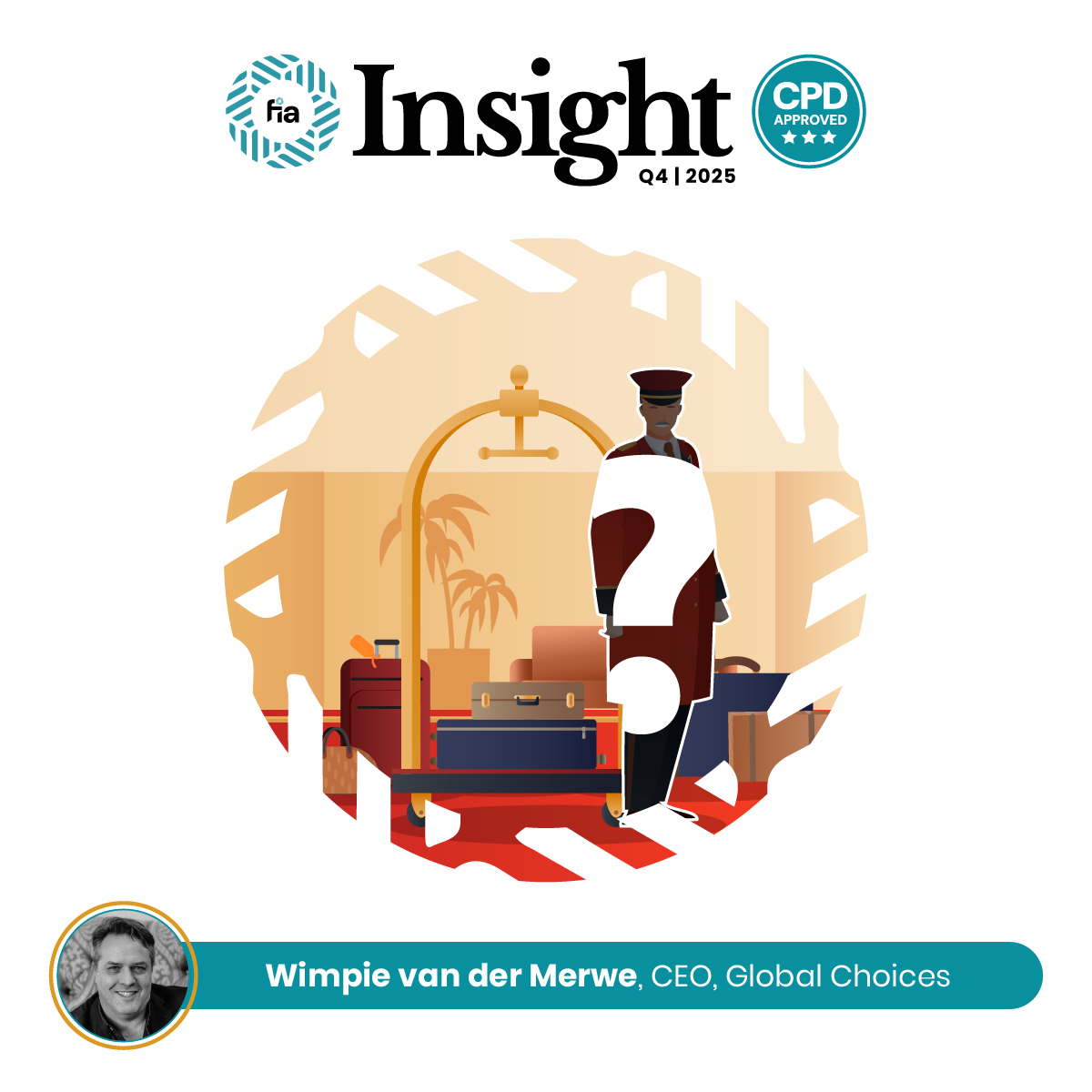
In his book Alchemy, Rory Sutherland talks about “the doorman fallacy”, contrasting traditional, analytical thinking with creative, human-centred thinking (which Sutherland calls “psycho-logic”).
Here’s a summary: Imagine a hotel management team analysing costs line by line. Someone points out that the doorman’s salary could be saved by installing automatic doors. On paper, it makes perfect sense – a simple case of efficiency and value engineering. But that decision, though logical, misses something vital.
If you look at a hotel through a purely financial lens, you might wonder whether you really need a doorman. Wouldn’t automatic doors be cheaper and more efficient? But this kind of “value engineering” misses the point. A doorman doesn’t just open doors. He welcomes guests, creates a sense of arrival, and represents the warmth and story of the hotel. His value isn’t just functional; it’s also emotional.
I often think of this when I look at the role of intermediaries in insurance. The same fallacy exists. On paper, it may seem efficient to remove the intermediary and rely entirely on digital or direct models. But what we lose in that equation is the very thing that builds trust, confidence, and care: the human connection.
We live in a world where uncertainty has become the norm. Natural disasters, economic shifts, political tensions. These aren’t distant news stories; they shape our clients’ realities and influence how they think about risk. Many feel overwhelmed, unsure of what to prioritise, and often underprepared.
That’s where intermediaries make all the difference. You don’t just sell policies. You help people make sense of uncertainty. You bring calm when things go wrong. You help families rebuild and businesses recover. That is the real value – and it’s something no algorithm can replace.
Price versus value
One of the most critical roles intermediaries play is helping clients understand the difference between price and value. The cheapest premium often comes with hidden costs: limited cover, unexpected exclusions, and underinsurance that only becomes clear when disaster strikes.
You help clients see beyond the price tag to what their cover truly protects. You explain the fine print, identify the gaps, and tailor solutions to each person’s life or business. You make insurance personal again.
Relevance
Life never stands still, and neither should an insurance policy. A client who started with a small business five years ago may now have an entire fleet of vehicles. Families grow. Homes expand. New risks emerge. This is where your ongoing relationship adds real value.
At renewal time – and often in between – you’re there to review, adjust, and make sure the cover still fits. You’re not just a point of contact; you’re a partner who walks the journey with them.
Blending tech with the human touch
We all know that clients value convenience. Digital tools, comparison platforms, and mobile access are part of everyday life. The future isn’t about choosing between human and digital – it’s about combining them.
Technology can make your advice more efficient, transparent, and accessible. But it’s your personal connection that gives clients confidence. When they can click, compare, and still call you for guidance, that’s where actual trust lives.
The actual test of an intermediary’s value comes during a claim. In that moment, clients don’t need call centres or complex portals. They need a human being who understands their situation and will fight for what’s fair.
You are their advocate. You make sure claims are appropriately handled, payments are fair, and stress is reduced. You don’t gain from denying claims; your reward is the relief in a client’s voice when you’ve helped them through one of life’s toughest days.
Be available
The world doesn’t switch off at 5 pm – and neither do emergencies. That’s why I believe every intermediary should consider offering 24-hour assistance, backed by reliable digital support.
At Global Choices, we’ve seen how powerful it is when a client knows their broker is only a call away, no matter the hour. It builds trust, loyalty, and peace of mind.
Beyond emergencies, consider providing clients with practical digital tools – maintenance checklists, trusted service providers, and proactive risk-management advice. These small touches remind clients that you’re not only there for them when things go wrong, but also when everything is going right.
Intermediaries are not a cost in the insurance value chain – they’re a connection. Like Sutherland’s doorman, you bridge the gap between the establishment and humanity; between policy wording and personal experience.
When clients think of insurance, they might think of paperwork. But when they think of you, they remember the person who took their call, explained the fine print, and stood by them when it mattered.
That’s the hidden value we must never lose sight of.