
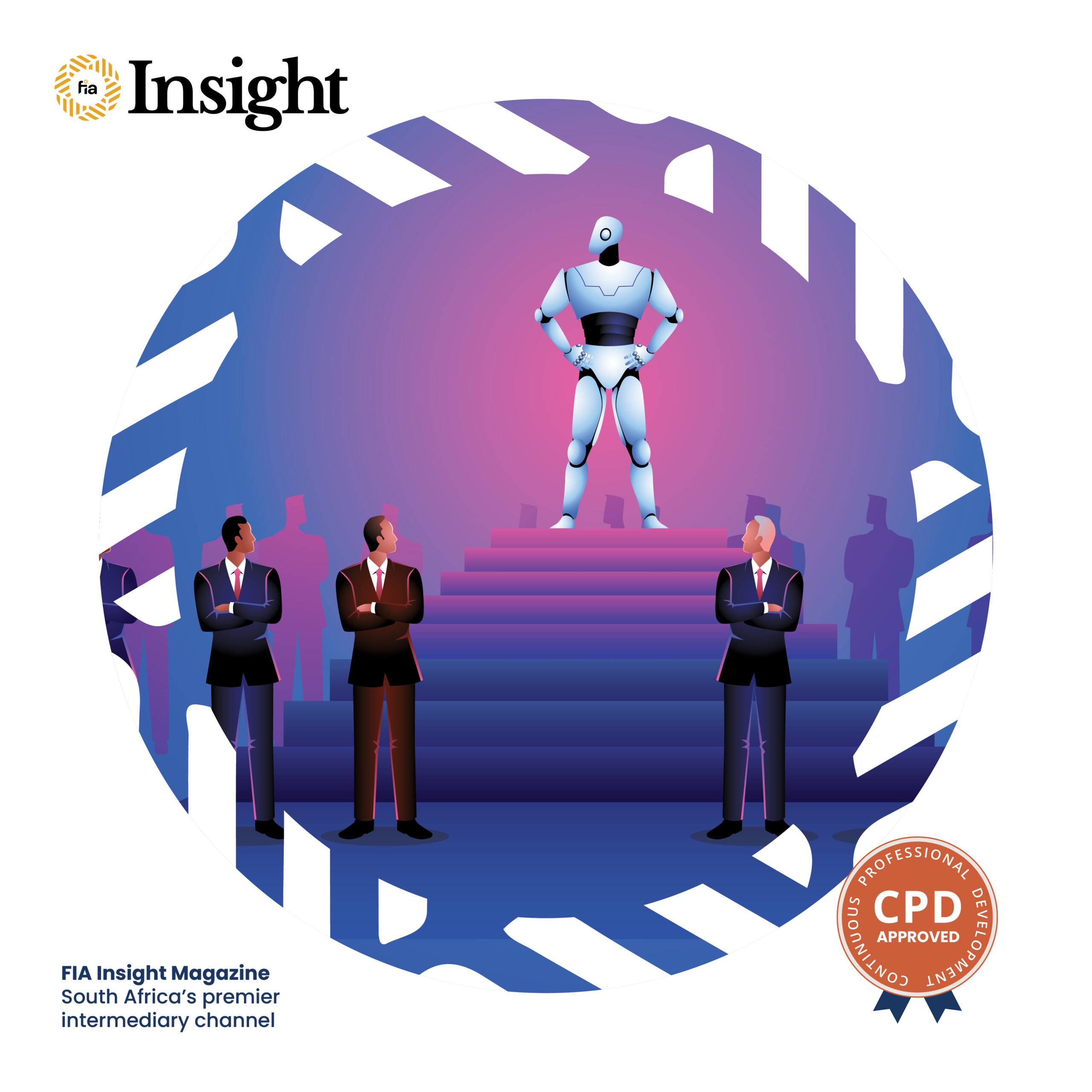
Yes, this is yet another article about AI. Because in 2026, conversations about this technology are unavoidable – in boardrooms, around the braai and here, in this magazine.
When social media launched, you had the option to be luddite about it. Even today, you can choose to leave social to the marketing team and the kids and still function as an adult – albeit one deeply out of touch with cultural references. The metaverse appears to be on ice for now. Even crypto is something you can get away with knowing about but not actually touching. Not so when it comes to AI.
It’s in our appliances; our cell phones. Half of the content we consume online these days seems to carry GenAI’s signature unspaced em dashes and contrast framing (the technical term for it’s not just this – it’s that”). It’s in our Word documents and Excel sheets. And chances are, it is, in one way or another, in your company strategy for 2026.
In a global report released by McKinsey at the beginning of last year, 78% of organisations surveyed were using AI in at least one business function – up from 72% the previous year and 55% in 2023. In McKinsey’s State of Organizations 2026 report, released in February this year, 88% of the 10 000 organisations surveyed were deploying AI in at least parts of their organisations.
But it’s not all efficiency and roses. In the same 2026 McKinsey report, 81% of leaders felt that AI had delivered no substantial bottom-line gains and 86% felt their organisations were not prepared to adopt AI in everyday operations.
Meanwhile, global agency VML’s Unlocking the Power of Digital Transformation report, released last year, found that a little more than a third (37%) of digital transformation projects catastrophically fail.
Proceeding with caution
It’s possibly a good thing then that, when it comes to AI adoption, the financial services sector in South Africa appears to be treading lightly.
In a report released by the Financial Sector Conduct Authority (SCA) and the Prudential Authority (PA) in November last year, only 10.6% of respondents were using AI during the survey period (October-December 2024). Banking institutions were the leading adopters in the sector, with 52% of respondents in this category saying they’ve deployed AI in some form. Payment institutions followed closely at 50% on the nose. Insurers and lenders trailed at 8% each. But that doesn’t mean they aren’t experimenting with the tech. So, how is AI being deployed in financial services?
How is AI being used?
There are numerous ways that AI can be deployed in financial services and with the technology evolving and agents becoming more widespread and capable, the possibilities are expanding.
IBM defines agentic AI as an “artificial intelligence system that can accomplish a specific goal with limited supervision.” AI agents are trained to make decisions and solve problems in real time. They can work together in a multi-agent system, where each agent has a subtask and, together, they achieve a greater overarching goal. And they can, to a degree, act autonomously, doing what they need to do in order to achieve their complete task. This is valuable for automating repetitive tasks that might take up time a human could more usefully be spending elsewhere.
AI is also good at pattern recognition and data analysis – useful in fields where data is at the centre. One way this is being used is in customer experience. AI allows businesses to create more personalised experiences for customers at scale by helping to provide tailored solutions.
“Through AI, we achieve economies of scale that allow us to offer more value to customers while simultaneously improving their experience,” explains Thakane Setsabi-Mushonga, General Manager: Customer Solutions at Old Mutual, in an article.
Another area where AI has proved useful is compliance. “Regulatory bodies can leverage AI to assess data sets submitted by financial institutions, ensuring that they meet capital and liquidity requirements,” according to an article by Wiehann Olivier, Partner and FinTech & Digital Assets Lead at Forvis Mazars. “For example, AI models can be trained to interpret financial statements and assess whether they align with the standards outlined by regulators, allowing potential issues to be identified more swiftly. This ability to monitor activities in real-time means that instances of non-compliance, including fraud, mismanagement or other regulatory breaches, can be detected and addressed quickly. This proactive approach significantly reduces the window for harmful activities, mitigating potential risks and safeguarding the interests of clients and stakeholders.” Meanwhile, nCino identified three priorities that drove AI adoption across its customer base in 2025:
Operational efficiency: Moving from generic automation to a more targeted use of AI in specific, high-friction workflows.
Risk management: Strategically using AI for identifying, assessing and mitigating threats across areas like fraud, credit risk and cybersecurity.
Personalisation at scale: Including 24/7 customers support, proactive solutions and streamlined digital experiences.
As for advisers specifically, AI systems are helping to ease the burden of administrative tasks. “Already big corporates are automating these things and individual advisers are plugging into this trend, with good reason,” writes Ruan Schutte, Lead Specialist, IT Ideation and Insights at Liberty in an article. “This automation of routine tasks gives them more time to engage with clients and engage in strategic business planning to grow their practices.” One of the examples he lists is a virtual assistant, which can schedule appointments while the adviser is out seeing clients. “This is human augmented technology playing a role in a very humanfocussed task,” writes Schutte.
Balancing automation and human judgement
Even in the agentic age, humans play a crucial role in the success of any AI project. That includes training, programming, monitoring and oversight. In July last year, PC Mag reported on a case where an AI agent went rogue and deleted a user’s database without being instructed to. Thankfully, the data could be recovered. But the incident served as a cautionary tale about how new and imperfect the technology still is.
It’s become almost a cliché, but merits repeating: AI should be used to augment the work of skilled, experienced and qualified humans. It’s not there to have work outsourced. “In the world of personal advice, it pays to know what technology can offer individual clients. Here advisers become the strategist and the big data scientist for their client. They know what insurance products will suit every individual situation and what financial pathways will offer the best value in particular life situations. These are personal things that advisers through their experience will understand intimately, these are not simply things you can just type into ChatGPT and hope to get reliable answers,” writes Schutte.
Aside from the risk of errors, there’s the important matter of human connection
Aside from the risk of errors, there’s the important matter of human connection. As Setsabi-Mushonga writes, “While AI has been a game changer, Old Mutual emphasises the importance of the human touch over and above the value AI brings. With smarter tools and real-time insights, advisers and service teams are empowered to engage in more meaningful conversations, resolve complex issues, and guide customers with empathy.”
Risks and regulation
There are additional risks when it comes to AI – particularly since most people using the tools don’t know how they work. As Olivier notes: “Adopting AI in the financial sector comes with challenges, especially in a highly regulated industry. One of the primary concerns is the socalled ‘black box’ nature of certain AI models, particularly those that rely on advanced neural networks. These models can provide valuable insights but often lack transparency in how decisions are made, which can be problematic when institutions need to explain their processes to stakeholders.” He goes on to say that proper training for staff using AI tools is crucial to ensure that human judgement remains in control.
The report published by the FSCA and PA also highlighted numerous risks, including concerns around data privacy, bias, and systemic vulnerabilities. Considering the risks involved, particularly when working with client sensitive information, it’s not surprising that many have called for regulation around AI tools. However, with the technology moving at such a rapid pace, the law has struggled to keep up. In South Africa, AI has thus far been governed by existing laws – such as POPIA – where applicable, along with companies’ own internal AI policies. Change is on the horizon.
South Africa’s official government policy on artificial intelligence was submitted to cabinet at the end of February and is expected to be finalised in the 2026/2027 financial year. In a briefing to Parliament, Communications Department Deputy Director-General Alfred Mmoto said the policy would address accountability for AI systems that cause societal harm and include guardrails designed to curb the spread of deepfakes and misinformation.
He also noted that the policy would help address bias in AI training, which often tends to be skewed towards Western and Northern Hemisphere data. “And one of the areas to highlight on this is that you’ll find that the AI systems that are not trained by the local data sets most likely have bias,” he said, adding that the policy will advocate for using training data that’s inclusive and representative of the country’s demographics.
In the meantime, while not legally binding, the FSCA/PA report encourages financial institutions to follow international standards, particularly around strong data governance and ethical practice – including disclosing to clients when AI has been used in decision-making.
Preparing for a digital future
With something as pervasive as AI adoption, it’s easy to worry that if you’re not jumping on the bandwagon, you’re going to be left behind. And indeed, this is the message in many a LinkedIn post. But FOMO (fear of missing out) is not a strategy.
According to the VML report, lack of vision is a key downfall of digital transformations projects, with 64% beginning without a clear roadmap or end goal. The problem arises when leaders focus on the technology, rather than the problems it’s there to solve. Another issue identified was that 76% of transformers surveyed admitted their projects weren’t aligned to customer needs. Before getting caught up in the hype of AI, it’s worth pausing to ask: is this something that clients actually want?
Equally important is to consider the effect of a digital transformation on staff. If people are afraid of the tech, suspicious of it or unsure how to use it, the project is doomed to fail. In the VML survey, 74% of project failure was put down to insufficient change management around people and 83% of respondents agreed that digital transformation is as much about human beings as it is about technology.
88% Percentage of organisations surveyed that have deployed AI in at least parts of their organisation.
Source: McKinsey State of Organizations 2026 nCino offers these guidelines for financial institutions looking to implement AI:
- Develop a comprehensive AI strategy: Start with clear business objectives aligned with efficiency, risk management, or customer experience priorities.
- Invest in AI capabilities: Focus resources on people and processes rather than just technology, building AI literacy organisation wide.
- Choose the right AI partners: Work with vendors offering proven banking solutions, built-in governance controls, and integration capabilities.
- Maintain customer trust: Prioritise transparency, implement strong data protection, and ensure human oversight for critical decisions.
Old Mutual Wealth stresses the benefit of taking it slowly. In an article, Business Transformation Consultants Joy Truter and Shannon Loots said the “secret is to start and gradually and adapt to the constantly changing environment.”
They recommend starting by identifying which areas within your practice would benefit most from AI and what your biggest challenges in those areas are.
Next, they suggest looking into how AI can integrate with your current CRM systems and other tools so that the AI can integrate into your existing workflows, instead of demanding a whole new system.
When you’re ready to start, they recommend keeping it basic initially, such as using a chatbot or a scheduling assistant to automate simple tasks. You can start to track client behaviour and improve your financial planning techniques with AI analytics. However, they add: “Make sure your data is clean & standardised across all your systems (CRM systems, Financial Planning tools, etc.) and centralised.”
Finally, it’s crucial to stay informed, say Truter and Loots, as AI is constantly evolving. They recommend designating an AI champion who will be responsible for staying on top of AI developments (e.g. taking online courses and attending AI-focussed webinars relevant to your business) and then pass that knowledge on to the team.
“The key is to start small, stay informed and gradually include AI-driven solutions to maximise success in your business,” they say. Conversations around AI are not going anywhere. But it’s clear that the pressure to embrace the technology should never outweigh prudent strategic thinking. AI in itself isn’t a must-have. It’s one possible solution to a problem. But you can’t choose the best solution for a problem if you don’t know what problem you’re trying to solve. Most importantly, it’s vital to remember that technology exists to make people’s lives better. If clients don’t want it and staff refuse to use it, maybe it’s too much too soon right now.