
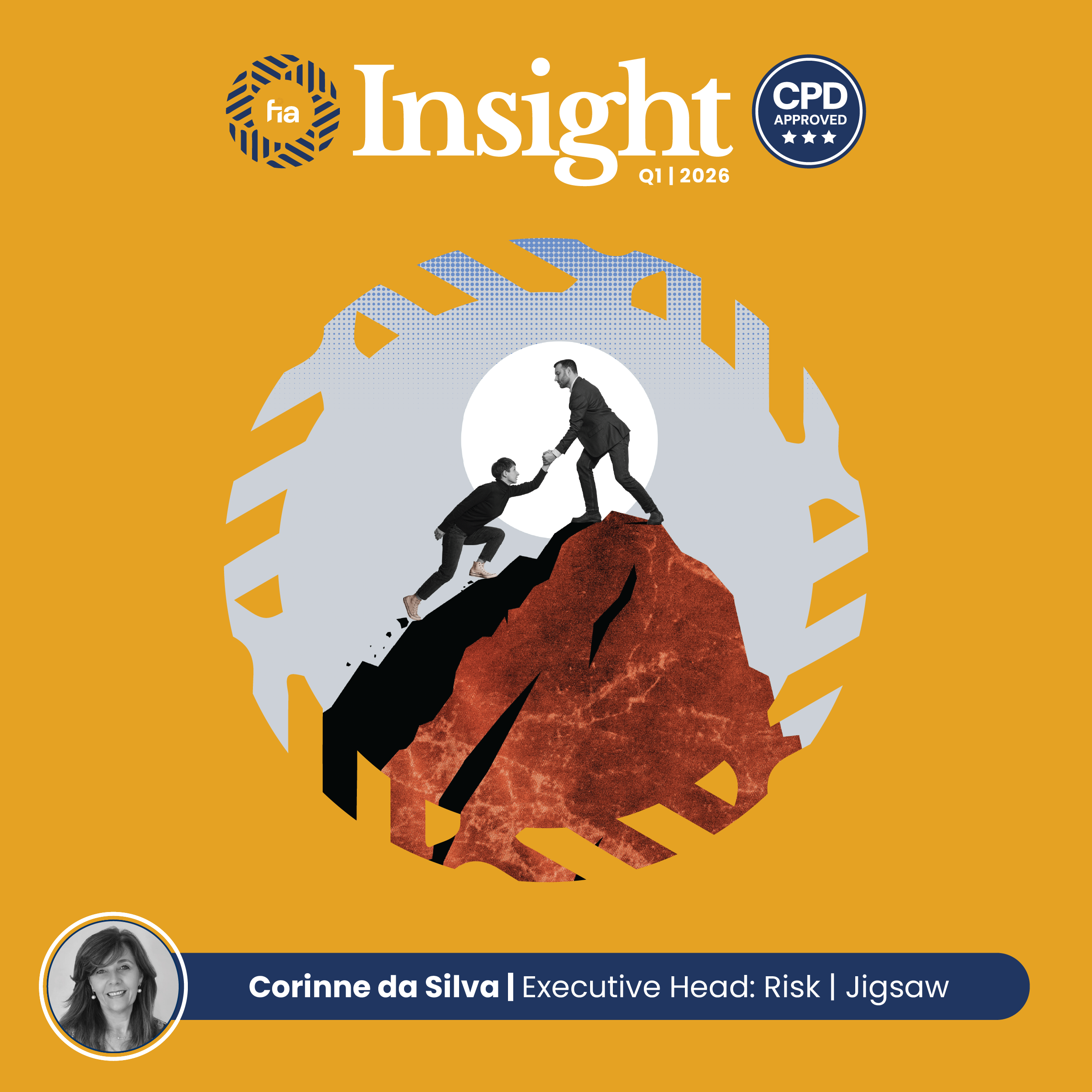
In the advice profession, client retention is often linked to service models, review structures and engagement strategies. These are important foundations but they are not the moments that ultimately test whether clients feel fairly treated. That test comes when circumstances change.
Claims, underwriting decisions, benefit restrictions, premium increases and employer-driven changes introduce uncertainty at precisely the moments when clients are most vulnerable. These are the points at which clients assess not only outcomes, but whether the advice process remains transparent, responsive and centred on their best interests.
As a UMA and binder holder working across multiple insurers, I am frequently engaged when advisers are supporting clients through these high-impact events. Sitting between advisers and insurers offers a unique vantage point into how Treating Customers Fairly is experienced in practice, not as a framework but as a lived outcome.
What becomes clear is this: advisers who retain trust are not those who promise certainty or avoid complexity. They are those who lead their clients through uncertainty by communicating clearly, setting realistic expectations, escalating appropriately and leveraging the right industry relationships to ensure decisions are understood, defensible and fair.
Hard moments matter more
Clients remember how you make them feel during periods of vulnerability. A seamless onboarding experience is appreciated, but it is not tested. A claim is tested. A benefit restriction is tested. A difficult conversation about affordability or cover adequacy is tested.
Client experience and behavioural research consistently show that emotionally charged, high-impact interactions have a disproportionate influence on how relationships are evaluated. A single negative experience during a critical moment can outweigh years of competent, routine or even excellent service.
The opposite is also true. When handled well, a difficult moment can strengthen trust more deeply than any number of positive check-ins. It answers the question clients rarely ask out loud, but always consider: “Will you still show up for me when this becomes uncomfortable?
Claims are human events
In group risk and health, claims are often framed in operational terms – documentation, turnaround times and process requirements. For clients, a claim represents something very different.
A claim may signal a loss of income. A threat to family security. Fear about the future. In these moments, clients are not assessing technical expertise alone. They are assessing clarity, presence and honesty.
Claims are not administrative events. They are human ones. And advisers who manage claims effectively tend to do three things consistently:
- They set expectations early and realistically
- They communicate proactively, even when there is no update
- They advocate responsibly, without creating false promises

Silence creates anxiety. Even a brief check-in confirming that progress is being monitored can significantly reduce distress. Clients do not expect perfection; they expect to feel supported while outcomes remain uncertain.
What escalation done well looks like
One recent case reinforced this for me. The matter came through an adviser who was acting firmly in their client’s best interests. They had engaged fully and recognised that, despite their efforts, the situation required additional support to reach a fair and clear resolution.
This is a mark of professional maturity.
Experienced advisers understand that retention is not about resolving every challenge independently. It is about recognising when escalation, collaboration and broader experience are required to protect the relationship.
With the adviser’s agreement, I spoke directly with the member to understand their concerns more fully. It became clear that the issue extended beyond the underwriting outcome itself. The member had previously been accepted with the same condition and the new restriction felt unexpected and unexplained.
After taking the time to listen, explaining how underwriting decisions are made and engaging further with the relevant decision-makers to ensure full context was considered, the matter was reassessed. The decision was overturned and the member’s cover was accepted at the required level.
While the technical outcome was positive, the more significant result was the preservation of trust. The adviser’s empathy, persistence and willingness to escalate appropriately ensured that the client felt supported throughout a difficult moment.
This is why experienced advisers retain clients – not because they avoid complexity but because they remain present and engaged when complexity arises.
For advisers, this offers an important reminder: you do not need to navigate these moments alone. Strong advice businesses are built on collaboration, shared accountability and the confidence to seek support when clients are vulnerable.
Change management builds confidence
Change is unavoidable. Premium adjustments, benefit restructuring, insurer movements, legislative updates and employer reorganisation all introduce uncertainty.
Clients are often less resistant to change itself than they are to not understanding what the change means for them. In these moments, clients are asking:
- Why is this happening?
- What does this mean for me or my employees?
- What choices do I have?
- What happens if I take no action?
When advisers rush these conversations or rely solely on technical explanations, trust can erode. When they slow down, communicate clearly and acknowledge the emotional impact of change, confidence grows.
Effective change management is less about having immediate answers and more about providing steady leadership while clients navigate uncertainty.
Tough conversations require leadership
Advisers are highly skilled technically, but may be less comfortable with emotionally difficult discussions. Conversations involving illness, disability, retrenchment, mental health, or financial strain are not transactional in nature. They require empathy, calm and presence.
Clients do not expect advisers to remove the difficulty of these situations. They expect advisers to help them feel less alone while facing them. Often, a simple acknowledgement, “This is a lot to process” or “Let’s take this step by step” has a greater impact than the solution itself.
Building retention in hard moments
Retention during difficult moments does not happen by chance. It is the result of deliberate practice.
Advisers who consistently retain trust tend to:
- Follow a clear internal approach for high-impact events
- Communicate proactively before clients feel the need to follow up
- Educate clients well before claims or changes arise
- Minimise administrative friction through strong internal processes
- Seek feedback after critical events to reinforce the relationship
Consistency builds confidence. Presence builds trust.
Ultimately, client retention is not built during calm periods. It is built during moments of uncertainty, frustration and fear. Claims, changes and difficult conversations are where relationships are truly tested.
Sometimes these moments present as a claim. Sometimes they appear as a benefit restriction that feels unfair or confusing. What defines the outcome is not only the decision itself, but whether the client felt heard before that decision was final.
Advisers who are willing to slow down, explain clearly and advocate thoughtfully become more than service providers. They become trusted partners. In a South African advice environment shaped by economic pressure, health uncertainty and constant change, trust is not a soft skill. It is a competitive advantage built through collaboration between advisers and industry partners who are prepared to show up together when clients need it most.