
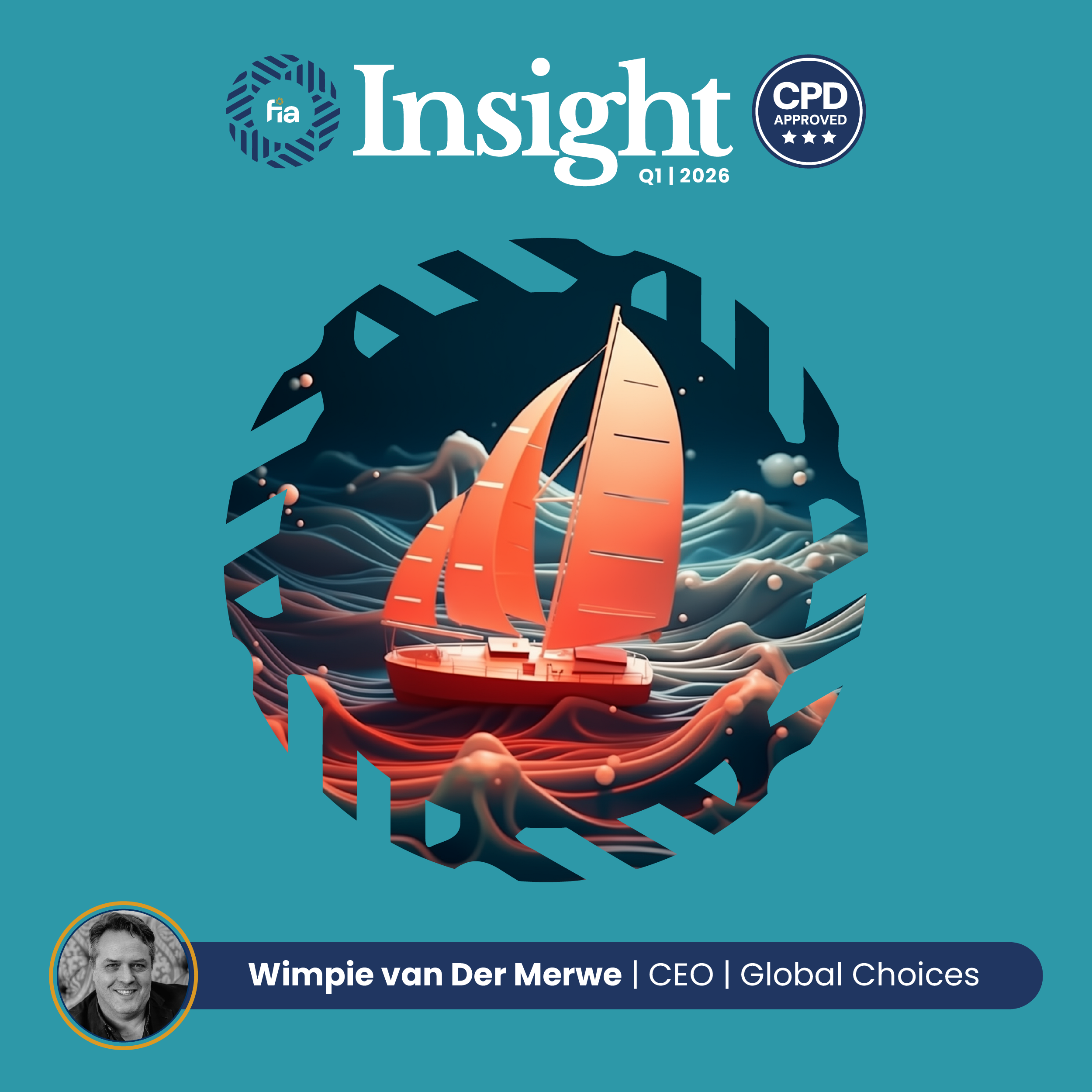
Insurance has always been a profession shaped by uncertainty. Brokers operate where risk, emotion, regulation and expectation collide. As we move into 2026, those pressures are intensifying. Clients expect faster responses, systems are more complex, regulatory scrutiny is increasing and the pace of change shows no sign of slowing.
In moments like these, an ancient Taoist parable offers a practical lesson for modern insurance professionals. Known as the story of the empty boat, it comes from the writings of the Chinese philosopher Zhuangzi and speaks directly to how we respond under pressure.
The story of the empty boat
Zhuangzi lived around the fourth century BCE and often used parables to explore human behaviour, ego and perception. One of his most enduring stories tells of a man rowing a boat upstream. As he paddles, he notices another boat drifting downstream directly toward him. At first, he assumes the other boatman will change course. When this does not happen, irritation turns to anger. He begins shouting, demanding that the other person steer away.
The boat continues drifting. Eventually, the two boats collide.
Only then does the man realise that the other boat is empty.
In that instant, his anger disappears. There is no one to blame. No ill intent. What caused his frustration was not the collision itself, but the assumption that someone else was responsible.
The lesson is simple but profound. Much of our anger and conflict is not caused by events, but by the stories we tell ourselves about those events.
Why this matters for insurance brokers
Insurance broking is filled with emotionally charged moments. Claims arise during loss, disruption or crisis. Clients may be anxious, confused or frustrated. Brokers themselves are balancing deadlines, compliance, system limitations and competing demands.
It is easy, in this environment, to take things personally.
A short email feels aggressive. A delayed response feels disrespectful. A regulatory request feels unreasonable. The empty boat mindset invites a pause. What if this is not personal? What if the frustration comes from pressure, not intent?
This mindset does not excuse poor service or remove accountability. Instead, it creates space for clearer thinking and better decisions.
Calm as a professional advantage
One of the most valuable qualities a broker can bring into 2026 is calm. In a fast-paced, highly digitalised industry, calm has become a competitive advantage. Brokers who are able to respond thoughtfully rather than react emotionally are better positioned to guide clients through complexity.
The empty boat mindset helps separate facts from assumptions. Instead of escalating tension, it encourages us to focus on resolving the issue at hand. Over time, this builds trust. Clients remember advisers who remain steady when things go wrong.
Empathy in client relationships
Many client frustrations stem from fear or lack of understanding rather than dissatisfaction. Insurance products are complex, and few people encounter them at their best moments. The empty boat reminds us to approach conversations with empathy.
When we assume positive intent and listen carefully, interactions change. Conversations become more constructive. Relationships deepen. In a crowded market, this human approach is often what sets one broker apart from another.
Solutions over blame
As the industry becomes more automated, new points of friction are inevitable. Systems fail, data conflicts arise and processes evolve. The empty boat mindset shifts focus away from blame and toward solutions.
Instead of asking who caused the problem, focus instead on how it can be resolved quickly and fairly. This approach aligns well with modern broking, where collaboration and client experience are critical.
Adaptability in a changing industry
Regulatory change, consolidation and technological innovation continue to reshape insurance. The empty boat teaches acceptance without passivity. Change is not personal, and resisting it often creates more friction than progress.
Brokers who remain adaptable, open and curious are better equipped to evolve alongside the industry rather than be overwhelmed by it.
Mindful communication in a digital world
Much of today’s conflict arises through digital communication. Emails are misread, tone is lost and assumptions fill the gaps. The empty boat mindset encourages us to communicate with greater care and intention.
Clear language, measured responses and a willingness to engage directly can prevent unnecessary misunderstandings and preserve trust.
Handling competition
The story also highlights that competition is often not as fierce as you believe it to be. Sometimes, a rival is simply navigating at their pace, not directly affecting your course. Brokers should focus on enhancing their services and adding value to clients rather than being overly concerned about competitors.
A timeless lesson for modern professionals
The story of the empty boat has endured because it speaks to something universal. Our reactions shape our reality. For insurance brokers navigating the challenges of 2026, this lesson is both practical and grounding.
By choosing calm over anger, empathy over assumption and solutions over blame, brokers can navigate uncertainty with confidence and clarity. As Zhuangzi observed centuries ago, wisdom often begins when we recognise the limits of our own perceptions. When we do, many of the obstacles we face turn out not to be collisions at all, but empty boats drifting past.
“To be truly ignorant, be content with your own knowledge.” – Zhuangzi