
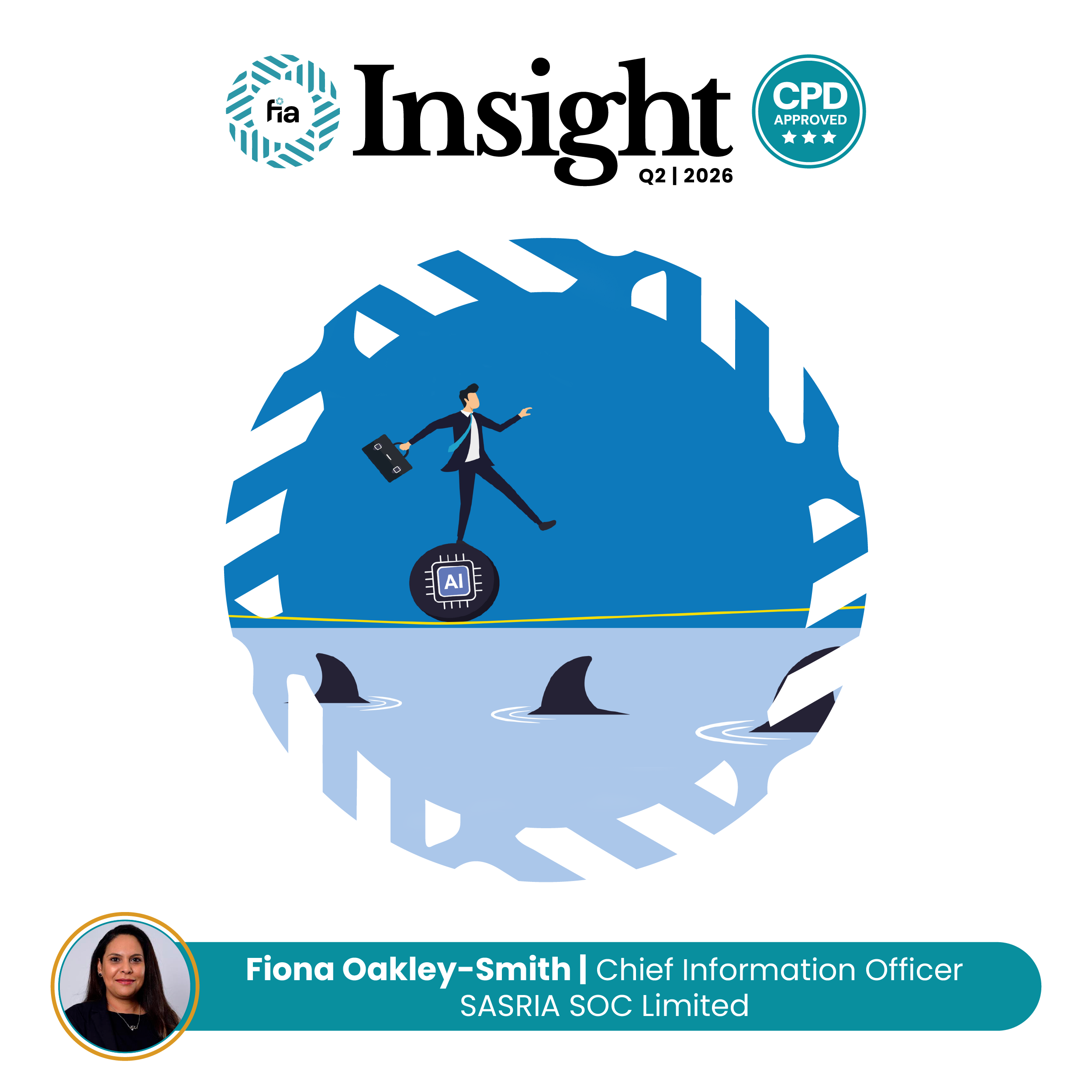
In an increasingly volatile world, the role of risk advice is undergoing a fundamental transformation. For decades, advisers, insurers and institutions have relied on historical data to predict future outcomes. But recent global disruptions — from pandemics and geopolitical instability to civil unrest and climate shocks — have exposed the limitations of traditional risk models.
Artificial intelligence (AI) also learns from historical data to detect patterns and make predictions, yet there is an opportunity to reshape this paradigm, moving the industry beyond prediction toward preparedness, away from simply estimating what might happen, and toward actively equipping institutions and clients to withstand, adapt to, and recover from disruption. At Sasria, our AI journey reflects this shift. While efficiency and automation are important, our deeper focus is on resilience: strengthening systems, improving early warning capabilities and enabling more informed, proactive decision-making.
Rethinking risk in an age of complexity
Traditional risk assessment models were designed for relatively stable environments, where historical trends could reliably inform future projections. However, events such as the Covid-19 pandemic demonstrated how interconnected and fragile global systems can be. Businesses faced simultaneous disruptions across supply chains, labour markets, consumer demand and capital flows, far beyond the scope of conventional scenario planning. Working through multiple scenario combinations is traditionally labour-intensive and often involves repetitive tasks.
AI offers a powerful response to this complexity when it is embedded in the day-to-day work of risk intelligence, scenario analysis, underwriting support and claims readiness. Through advanced analytics and machine learning, AI can process vast and diverse datasets more frequently and at a greater scale than traditional approaches. This enables more dynamic and nuanced scenario modelling, particularly in areas highly relevant to Sasria’s mandate, such as civil unrest and terrorism, and the underlying drivers that can influence these events, such as economic instability and social cohesion.
For example, AI can analyse social, economic and behavioural indicators to identify emerging patterns that may signal protest activity or social tension. It can integrate climate data to anticipate environmental stressors that may exacerbate vulnerability in certain regions. It can also model systemic shocks, tracing how a disruption in one sector may cascade across others. In this way, AI enhances our ability not only to foresee potential risks, but to understand their interconnected nature.
From predicting losses to building preparedness
The true value of AI lies not in prediction alone. Prediction, by its nature, is uncertain.
Even the most sophisticated models cannot fully account for the complexity of human behaviour or the unpredictability of global events, particularly since historical data is a limiting factor. The real opportunity lies in using AI to inform preparedness. For actuaries, this complements established practices such as stress and scenario testing, reserving and capital planning by helping assumptions refresh faster as conditions change and early warning signals emerge.
Preparedness shifts the focus from “What will happen?” to “How ready are we if it does?” This distinction is critical. Instead of relying solely on probability estimates of loss, organisations can use AI-driven insights to strengthen resilience. This includes stress-testing operational capabilities, identifying vulnerabilities in supply chains, enhancing contingency planning and improving response mechanisms.
Resilience itself has been widely defined across disciplines as the ability to absorb shocks, adapt to changing conditions and recover effectively from disruption. AI contributes to each of these dimensions. In disaster management, for instance, pattern recognition from satellite imagery can accelerate damage assessment and response. In urban planning, optimisation algorithms can design infrastructure systems that remain functional during extreme events.
Implications for advisers in a volatile world
For financial advisers and insurance professionals, this shift has significant implications. Portfolio construction and insurance strategies have traditionally been grounded in historical performance data and established risk-return assumptions. However, in an era defined by volatility and structural change, past data may no longer serve as a reliable guide to future outcomes.
AI can play a critical role here. Advisers can use GenAI to analyse a broader range of variables and simulate complex scenarios in a fraction of the time. This enables advisers to construct more resilient portfolios and insurance strategies. It can help identify hidden risks, uncover new opportunities and support more adaptive decision-making.
At the same time, behavioural research underscores the importance of the human element in advice.
A recent international study of financial advisers by McKinsey found that during periods of market volatility, clients rely heavily on guidance that is not only technically sound but also empathetic and contextually relevant. AI can enhance analytical capabilities, but it cannot replace the trust and judgement that advisers bring to client relationships.
The human imperative: contextualising AI insights
This brings us to a critical point: AI is a tool, not a substitute for human expertise. While AI can generate powerful insights, these must be interpreted and contextualised within the realities that clients face. Risk is not experienced in abstract models; it is lived in real-world contexts, shaped by individual circumstances, behavioural responses and socio-economic conditions.
Advisers therefore have a dual responsibility. On one hand, they must embrace AI and develop the capabilities to leverage its insights effectively. On the other, they must ensure that these insights are translated into advice that is meaningful, practical, and aligned with client needs. It also calls for ongoing investment in skills development. Encouragingly, initiatives such as Google’s recent funding for AI education and digital skills in South Africa signal growing recognition of the need to build local capacity in this area.
At Sasria, we see this as a collaborative journey. Our role is not only to adopt AI internally, but to contribute to a broader ecosystem in which data, technology and human expertise work together to enhance resilience across the economy.
Sasria’s role in an AI-enabled future
As a state-owned insurer with a mandate to provide cover against special risks such as civil unrest, Sasria occupies a unique position within South Africa’s risk landscape. Our experience in responding to large-scale events — most notably the 2021 unrest — has underscored the importance of preparedness, coordination and rapid response.
AI is increasingly central to how we fulfil this mandate. By integrating AI into our back-office and claims processes, we aim to improve efficiency, enhance accuracy and reduce response times. More importantly, we are exploring how AI can support early warning systems, enabling stakeholders to take proactive measures before risks escalate. This depends on strengthening our data intelligence across the value chain: improving exposure and policyholder data quality, enriching it with location and event information, and using trusted external signals so insights can translate into earlier, better-targeted action. To be sustainable, these capabilities must be delivered with strong data governance, security controls and clear accountability to improve decision-making without creating new operational or compliance risks.
In this sense, Sasria’s AI journey is not just about technology; it is about reimagining our role in a changing world. It is about moving from a reactive insurer to a proactive partner in resilience.
A new paradigm for risk advice
The shift from prediction to preparedness represents a new paradigm for risk advice. AI is at the heart of this transformation, offering tools that can enhance our understanding of risk and improve our ability to respond to uncertainty.
However, technology alone is not enough. The future of risk advice will depend on the integration of AI with human judgement, ethical considerations and a deep understanding of client needs.
For advisers, insurers and institutions alike, the message is clear: the question is no longer whether disruption will occur, but how prepared we are when it does. In embracing AI, we have an opportunity not only to predict the future, but to shape it, building a more resilient, adaptive, and prepared society for the challenges ahead.