
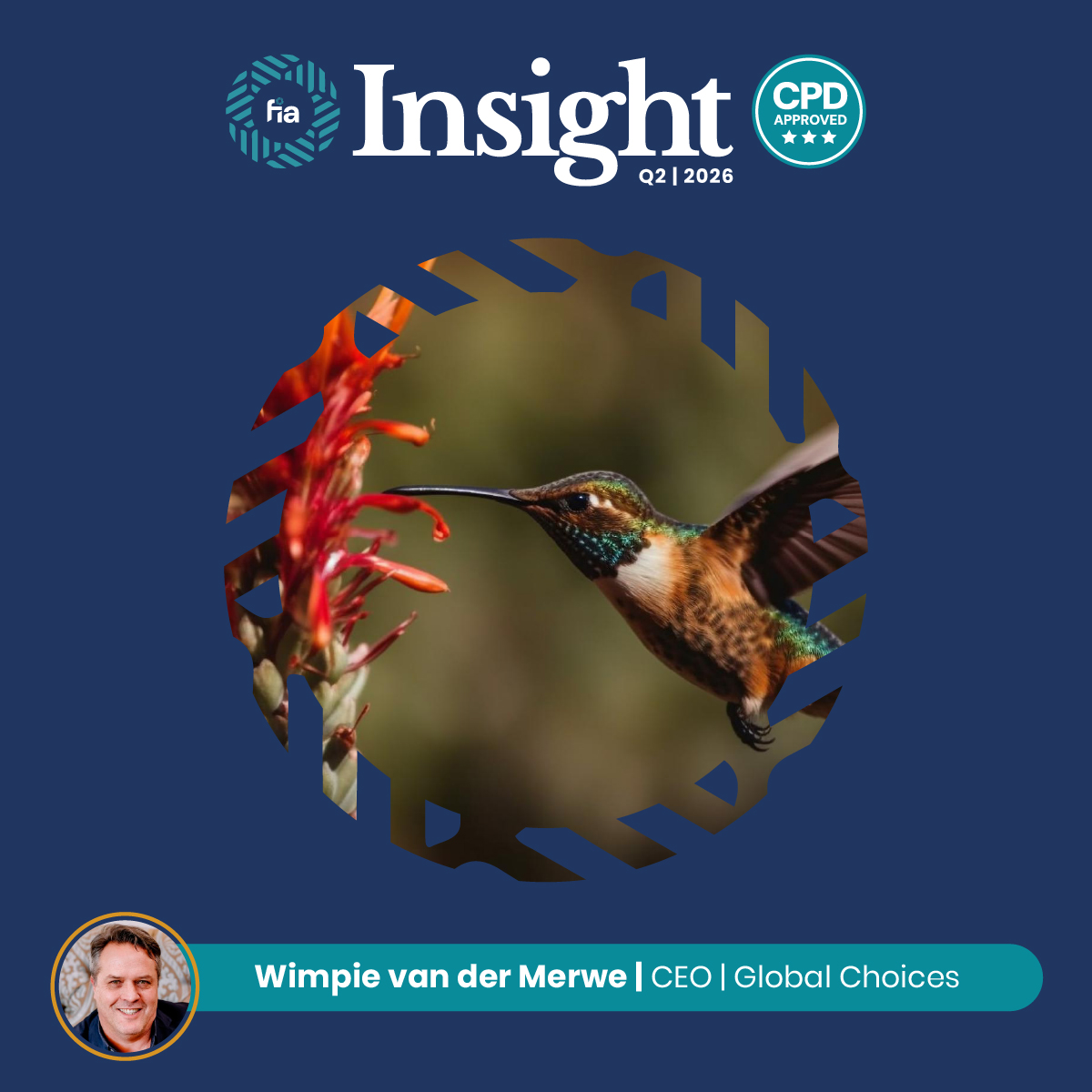
The world feels heavy with risk. War and climate disasters dominate headlines, economic uncertainty persists and rapid technological change continues to unsettle entire industries. Yet in moments like these, ancient stories often offer the clearest guidance. One such story is the parable of the hummingbird and the forest fire, popularised by Nobel Peace Prize laureate Wangari Maathai and rooted in Native American folklore. In this retelling, the hummingbird becomes a sunbird, a more fitting messenger for Africa.
At its heart, the story speaks to the power of individual action in the face of overwhelming crisis. For insurance brokers operating in an era defined by escalating risk, complexity and pressure, the lessons feel especially relevant. This is a profession that exists precisely because uncertainty exists. And yet, brokers often find themselves staring at fires that feel far too big to extinguish.
The parable of the sunbird and the fire
The story takes place in a forest. One day, a fire breaks out. Dry winds fan the flames, and the fire spreads from tree to tree. The animals watch as their home is destroyed. Elephants, lions, monkeys and birds flee to a nearby hill, stunned by the scale of the destruction.
“What can we do?” they cry. “The fire is too big. We are too small.”
Amid the panic, a tiny sunbird takes flight. It flies to a nearby stream, dips its beak into the water and carries a single drop back to the fire. The bird releases the droplet onto the flames, then turns back to the stream and repeats the journey. Again and again.
The other animals notice and begin to mock the sunbird. The elephant scoffs that the effort is pointless. The lion roars that a few drops of water will never stop such a blaze. The sunbird pauses and replies simply, “I am doing what I can.”
Moved by the sunbird’s commitment, the forest spirits and the rain god respond. A great downpour follows, extinguishing the fire and saving what remains of the forest. The message is clear: if you want miracles to happen, you have to do your part first.
Inaction is the greater failure
The most powerful lesson of the sunbird’s story is persistence. The bird does not pretend that its drops alone will stop the fire. It acts because inaction would be a greater failure. That mindset is deeply relevant for insurance brokers in 2026.
Today’s brokers face a landscape shaped by climate volatility, cyber risk, geopolitical instability and rapid digitisation. Extreme weather events have increased in frequency and severity, driving up claims and premiums. Cybercrime has become more sophisticated and more damaging. Regulatory expectations continue to rise, particularly around consumer protection and transparency.
It is easy to feel overwhelmed. Brokers cannot reverse climate change, eliminate cybercrime or stabilise global markets. But they can act within their sphere of influence. A single risk review. A conversation about resilience. A proactive recommendation that helps a client prepare rather than react.
Take climate risk as an example. Brokers may not be able to stop floods or fires, but they can help clients understand their exposure, improve risk mitigation and explore alternative cover structures. One carefully reviewed policy can lead to broader portfolio changes. One client conversation can shift how a business thinks about resilience. These small, deliberate actions accumulate.
Rejecting paralysis
The larger animals in the story represent something brokers know all too well: paralysis. Waiting for perfect information, perfect systems or perfect certainty before acting. In the insurance world, this often shows up as reluctance to adopt new tools, test new models or rethink long-established processes.
The sunbird offers a different approach. Act with what you have. Learn as you go. Improve incrementally.
In 2026, technology has become central to brokerage, from AI-driven analytics to automated claims processes. Not every broker needs to become a technology expert overnight. But experimenting with new tools, even in small ways, matters. A pilot project. A new client dashboard. A simplified digital onboarding process. Each step builds confidence and capability.
Small improvements compound. A modest increase in client retention, better claims turnaround times or clearer communication can have a meaningful impact over time.
Individual action and collective momentum
Another enduring lesson of the parable is how individual action can inspire collective change. The sunbird’s efforts challenge the assumptions of those watching from the hill. Action disrupts apathy.
Insurance brokerage is, at its core, a relationship-driven profession. Brokers who share insights, collaborate with peers and contribute to industry conversations help raise standards across the sector. One shared case study, one honest discussion about lessons learned or one contribution to professional development forums can influence far more than a single business.
This is particularly relevant in emerging areas such as cyber insurance. Clients are often anxious and confused, unsure where to start. Brokers who break the problem down into manageable steps create clarity and trust. A simple risk assessment, followed by practical guidance and tailored cover, turns fear into action. Those clients, in turn, become advocates.
Sustainability, resilience and longevity
The sunbird also teaches a lesson about sustainability. The bird does not exhaust itself trying to do the impossible. It does what it can, consistently.
For brokers, this is a reminder that resilience applies to people as much as policies. Burnout remains a real risk in a high-pressure industry. Smart use of automation, realistic workloads and attention to wellbeing are not luxuries. They are essential for long-term effectiveness.
Doing your bit does not mean doing everything yourself. It means focusing energy where it has the greatest impact and trusting systems and teams to support the rest.
A call to action
As the insurance industry enters 2026, the fires are real. Regulatory change, economic pressure and social inequality continue to shape the environment in which brokers operate. The sunbird’s lesson is not about heroics. It is about responsibility.
Ethical advice, clear communication and genuine advocacy matter. Small actions, such as supporting financial literacy initiatives or helping underinsured clients understand their options, align individual effort with broader social good.
The parable of the sunbird and the fire reminds us that progress rarely begins with grand gestures. It starts with movement. For insurance brokers, that means showing up for clients, acting with integrity and choosing action over inertia. One drop at a time.
In a world where uncertainty is guaranteed, those who persist will not only endure, but lead.