

Group Personal Accident insurance did not start out as the broad-based employee benefit we recognise today. Traditionally, it was a selective financial benefit reserved for the insured — in this context, the company — or offered only to the high-income earners within a company.
Over time the focus has shifted. GPA is now understood as a benefit for all employees, from high-income earners to blue collar workers, designed to protect them and their dependants against the financial consequences of accidental death or disability.
This shift reflects a broader change in workplace culture. Employers today face a higher expectation to prioritise employee wellbeing, not merely as a compliance exercise, but as a genuine duty of care. Offering GPA cover is one of the clearest ways a company can demonstrate that commitment.
When the breadwinner is gone
The human cost behind these policies is significant. In many South African households, it is the breadwinner whose income sustains the family. When that person dies or is disabled as a result of an accident, the family is left not only grieving but also facing lost income, mounting medical bills, and no clear financial safety net. GPA insurance exists precisely to soften that blow.
Why GPA, when COID already exists?
Compensation for Occupational Injuries and Diseases (COID) is compulsory and legislated in South Africa, yet many companies still elect to take out GPA cover. The reason is speed. COID claims and payouts can take months to process, while GPA payouts happen considerably faster, enabling affected families to meet urgent financial needs without the extended wait. GPA is not a replacement for COID; it is a complement that closes the gap between an accident and financial relief.
Clearing up a common misconception
Within the industry, GPA is sometimes mistakenly bracketed with life insurance, leading to the assumption that a life licence is required to market and sell this insurance product. This is incorrect. GPA is a non-life insurance product, distinct from funeral benefits and life cover. While all three serve related purposes, GPA has its own strengths, its own underwriting logic, and its own place in a client’s risk portfolio. Intermediaries should be confident in marketing this product and in distinguishing it clearly for their clients.
The access gap South Africa cannot ignore
Affordability makes GPA especially relevant locally. As many as 85% of South Africans do not have medical aid cover, and many employers simply cannot afford to offer it as a benefit. Against this backdrop, GPA, with its comparatively low premiums, can be a crucial layer of protection for employees who would otherwise have none.
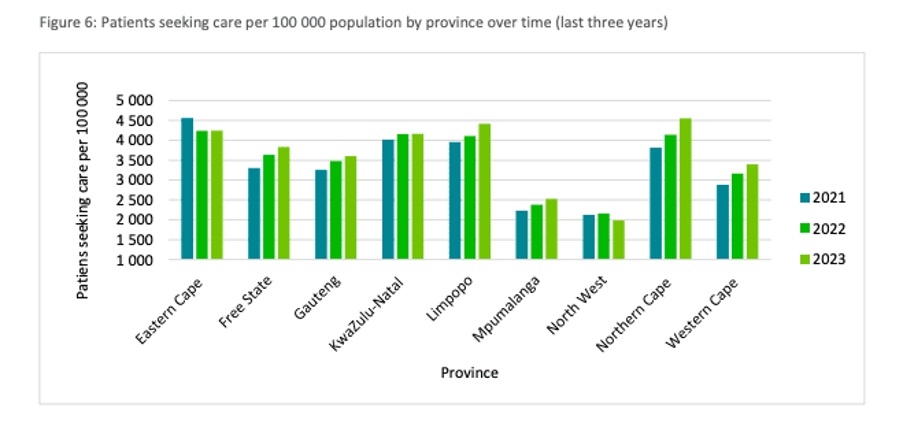
The mental health picture reinforces the same point. A large majority of South Africans living with mental illness go without any form of care. Health-e News’ Mental Health Situational Analysis noted a marked rise in patients seeking care at outpatient facilities across most provinces between 2021 and 2023 — a trend that speaks to both growing need and a system under strain.
Technology is starting to close some of this gap. Employee Assistance Programmes have evolved considerably, now offering digital health screening tools and virtual consultations with general practitioners and psychiatrists. Through employer-funded health wallets, employees can access quality private healthcare on demand, often as simply as a facial scan without losing a full day of work to queues. These programmes are also increasingly cost-effective, making them an attractive addition to an employer’s broader wellbeing strategy.
The road safety reality
Road accidents remain a major driver of GPA claims. According to the RTMC’s State of Road Safety Report for January to March 2025, 2,403 road fatalities were recorded in that quarter, down from 2,818 in the same period of 2024. While this a welcome improvement, it still leaves South Africa’s road death rate at roughly 24–25 per 100,000 people, well above the global average of approximately 17 per 100,000. For intermediaries, this context underscores why accident-related cover remains highly relevant to South African employers, regardless of industry.
Complementing traditional EAPs, newer employee support solutions now bundle access to private healthcare facilities, workplace injury management, COID claims assistance, and rehabilitation services, which reduces the administrative burden on employers while ensuring employees get the care they need.
Future financial benefit
Disability does not only change a person’s physical circumstances; it often changes their financial future. The ability to install wheelchair-friendly facilities at home, purchase assistive devices, access quality rehabilitation services and continue funding a child’s education can make a significant difference to an employee’s long-term recovery and dignity. This is where the true future value of GPA insurance lies.
A call to the industry
Ultimately, it is the duty of the insurance industry to educate clients and raise awareness of the value GPA insurance offers. Whether or not an employer takes up the cover, GPA should at the very least be presented as an option, because for many South African families, it may be the difference between financial devastation and recovery.
Sources referenced: RTMC State of Road Safety Report, Quarterly Report January–March 2025; Health-e News Journalism for Public Health, Mental Health Situational Analysis; Statistics South Africa medical aid coverage data.